

Moisturizer Jar Supplier: The Water Test Most Buyers Skip
A moisturizer is mostly water. Sixty to eighty percent, typically. Water is the first thing to leave.
Not through the wall. Through the opening. Every time the lid comes off, a little more goes.
We are a moisturizer jar supplier in Guangzhou. Four resins run on our lines. PET, PP, PETG and glass.
Here is what water does to each of them.
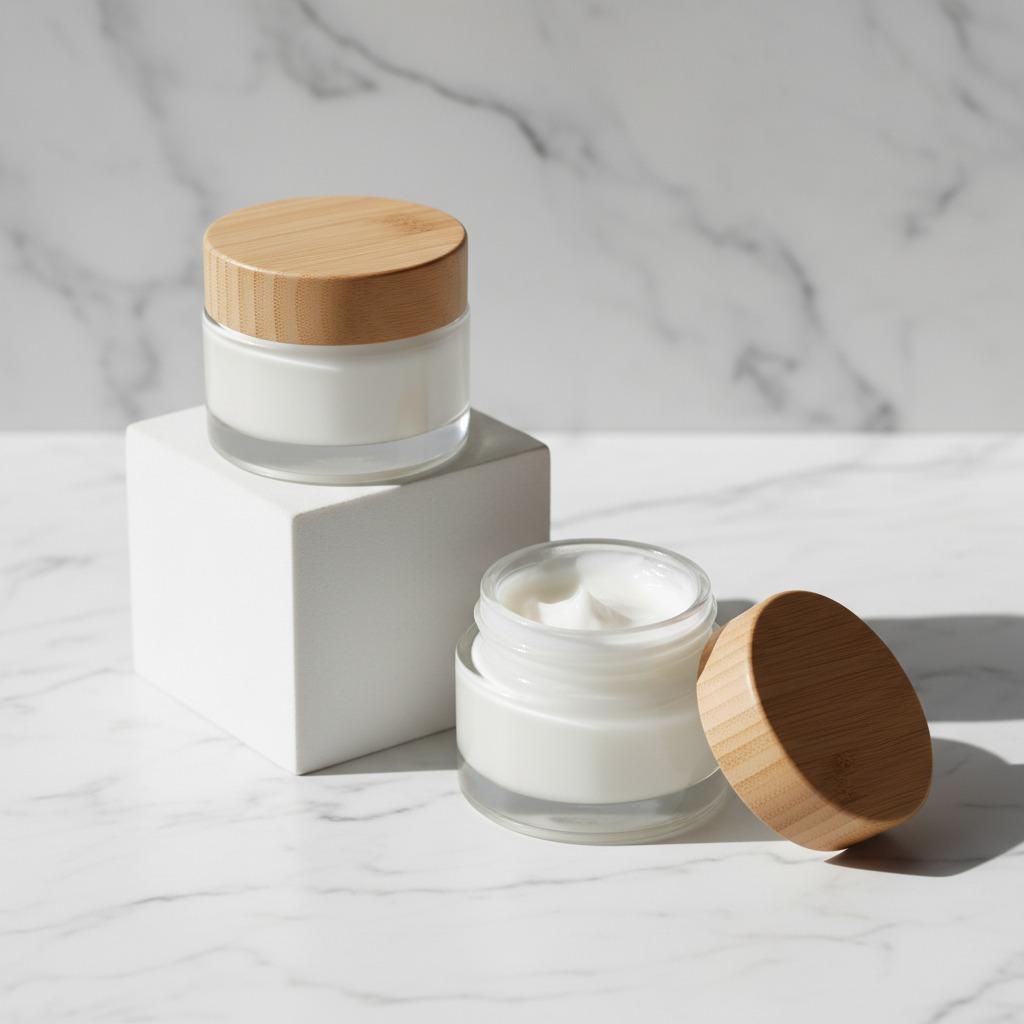
1. The formula picks the pack
Three numbers settle the jar before anyone talks about colour. Water content. Actives. Viscosity.
Above 60% water, the product is exposed the second the lid lifts. Every opening swaps moist air for dry air.
Actives move the answer further. Vitamin C. Retinol. Azelaic acid. These oxidize. A wide-mouth jar is the wrong pack for them, however good it looks on a shelf.
Viscosity sets the mouth. Thin lotion pours. Thick cream needs a finger or a spatula. Body butter needs a wide mouth and a big diameter to match.
So cream jar for face cream brands is not one product. It is a short list of decisions, taken in order.
2. Where a jar actually fails
Four points. Ranked by how often they show up on returns.
The opening. Air exchange on every open. Finger contact too. Then a skin forms across the surface. None of that is the resin's fault.
The liner. Foam takes a shape under compression, then keeps it. Tighten the lid a second time and it no longer seals the way it did at the factory.
The thread. Cream works into the thread and dries there. Now the customer cannot get the lid off. That is a closure complaint, not a cream complaint.
The flight. Air freight drops cabin pressure. A jar sealed at sea level now sits inside a pressure difference. If the liner is short of compression, the product finds the gap.
A moisturizer jar supplier who quotes ten variants is quoting inventory, not packaging.
3. Five tests, and what each one catches
Most buyers ask for a single test. These five catch different failures. Ask per SKU.
Vacuum decay. Pump the air out of a chamber with the closed jar inside. Then watch the pressure climb. A leaking jar lets air back in, so the curve rises. Thread and liner leaks surface here, before anything ships.
Open-close cycling. Thirty cycles, then vacuum decay again. This one finds the liner that only seals when it is new.
Inverted hold. Forty degrees, upside down, seventy-two hours. Seepage at the liner edge shows up. So does a fill line set too high.
Drop test. 1.2 m, six faces. Watch for a cap that pops and a wall that cracks.
Compatibility. Fill it with your actual formula. Hold at forty degrees for four weeks, then eight. Deformation, colour shift and stress cracking all appear on that schedule.
We run all five and keep the records. The 1.2 m figure is a common bench condition, not a standard we claim. Same for 40°C and 72 h.
4. Liner, thread, and the 0.2 mm
Three liners cover most jars.
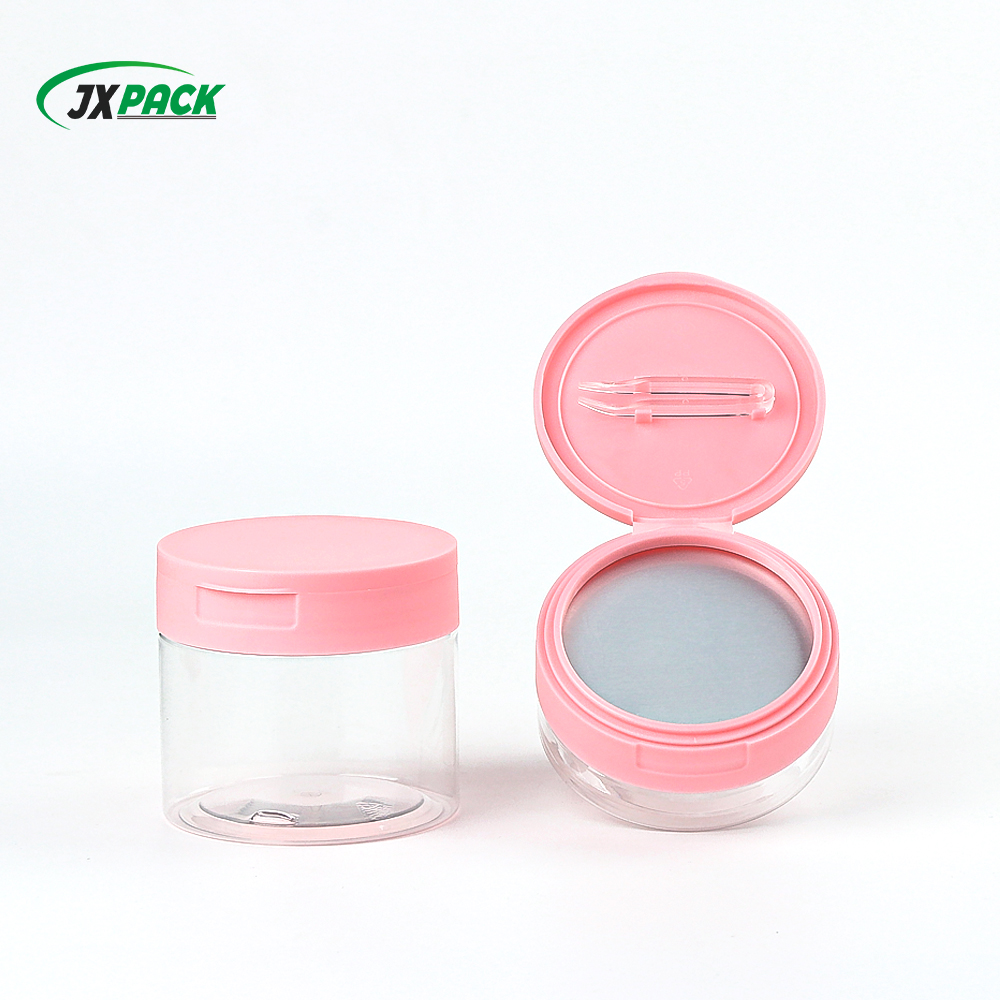
PE foam disc is the default. Cheap. Forgiving. Fine for cream.
A PE sheet is thinner. It suits a cap with little headroom.
Aluminium composite gives the best barrier. You need it when the oil phase is high enough that foam would swell.
0.2 mm of liner thickness can be the whole difference. Under-compressed, the jar leaks on the plane. Over-compressed, the cap backs off inside the carton.
Thread comes in single and double lead. Double lead opens in half a turn. It feels premium. It also leans harder on the liner, because there is less thread engagement.
As a moisturizer jar supplier we quote liner and thread together. They are one decision, not two.
5. Night cream, eye cream, face cream
Three jars. Three jobs.
| Product | Typical fill | Viscosity | Jar direction |
|---|---|---|---|
| Face cream | 50 g | Medium | 50–53 mm mouth, single or double wall |
| Night cream | 50 g | High oil | Same size, oil-resistant liner |
| Eye cream | 5–15 g | High | Small mouth, spatula or applicator |
Night cream carries more oil. A PE foam disc can swell and take a set. That is why the night cream jar manufacturer conversation starts at the liner, not at the colour.
Eye cream is small and expensive. The jar is a small share of unit cost, while the tolerance is tighter. A 5 g jar with a bad thread is a return on a 40 euro product. An eye cream jar supplier is really selling tolerance.
6. Body butter is not a bigger face cream
Viscosity sits in a different order of magnitude. You cannot pump it. You scoop it.
So body butter jar wholesale requests arrive with two fixed points. Wide mouth. Big diameter. 200 g and 250 g are the usual sizes.
Double wall helps, and not for the reason people give. The outer wall insulates the hand, so the product softens more slowly. It also gives the rim something to grip.
7. First order for a startup
The first order usually goes wrong the same way. Too many variants.
Try a 60 / 30 / 10 split for cosmetic jar packaging for skincare startup volumes. Sixty percent in the hero size. Thirty in the second size. Ten held back small, for sampling.
One colour. One decoration. Print a label before you cut a tool.
MOQ is 10,000 pcs. Lead time runs 25 to 30 days. Samples come before the tool, not after.
8. What to send us
Three ways to start.
Send the jar you use now. We weigh it, measure the cavity, check the liner.
Send four numbers instead. Fill weight. Density. Mouth diameter. Target unit weight. With those we quote a mould, not a guess.
Or send the water content and the actives. That picks jar or airless before anything else gets discussed.
Then ask for the five test records. A supplier who cannot show vacuum decay data for the SKU you are buying has told you something useful.
Glass, PET, PETG, PP. Four resins. Four sets of trade-offs. We run all four, and we will say when the answer is not a jar.
MOQ 10,000 pcs. 25 to 30 days. Samples free, courier on you.
Where this sits
Capacity numbers for the 50 g size are broken down in the 50g cream jar guide. If your market asks for paperwork, the FDA document checklist lists what a jar order should carry. To send a sample or a spec sheet, use the contact page.