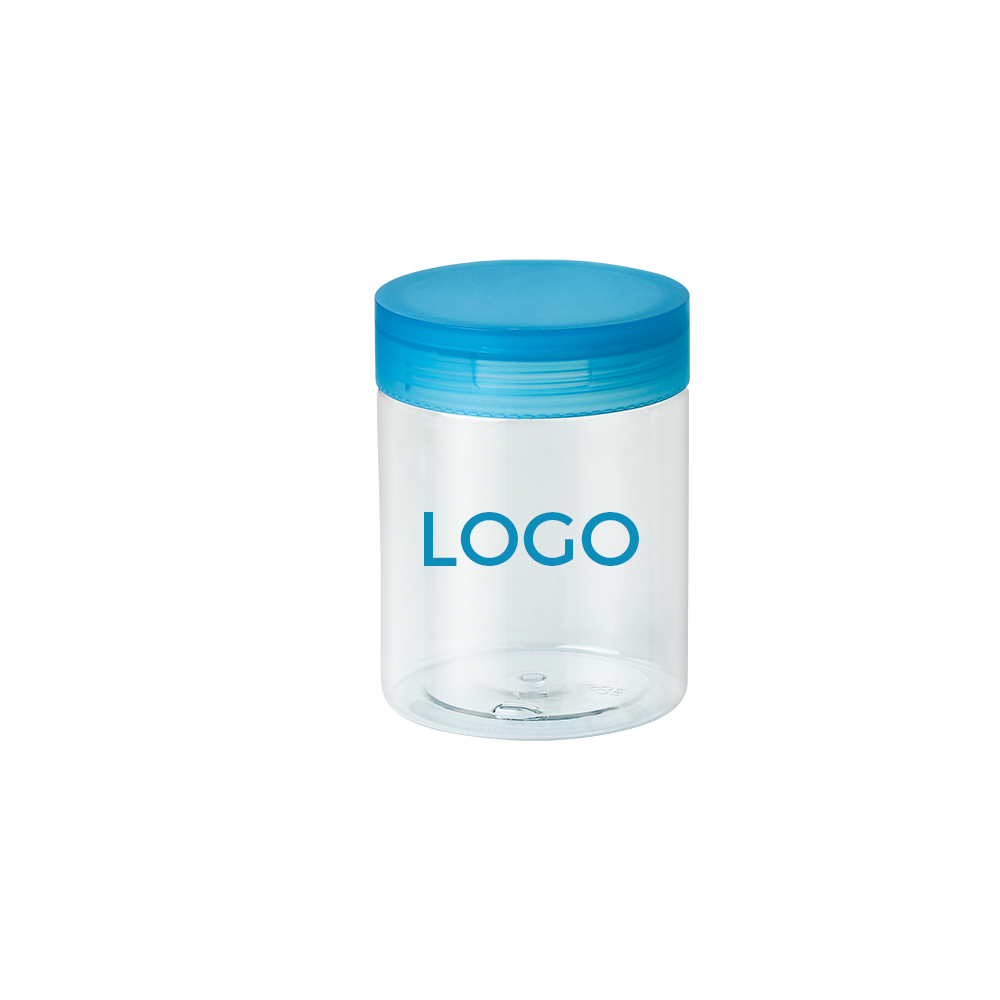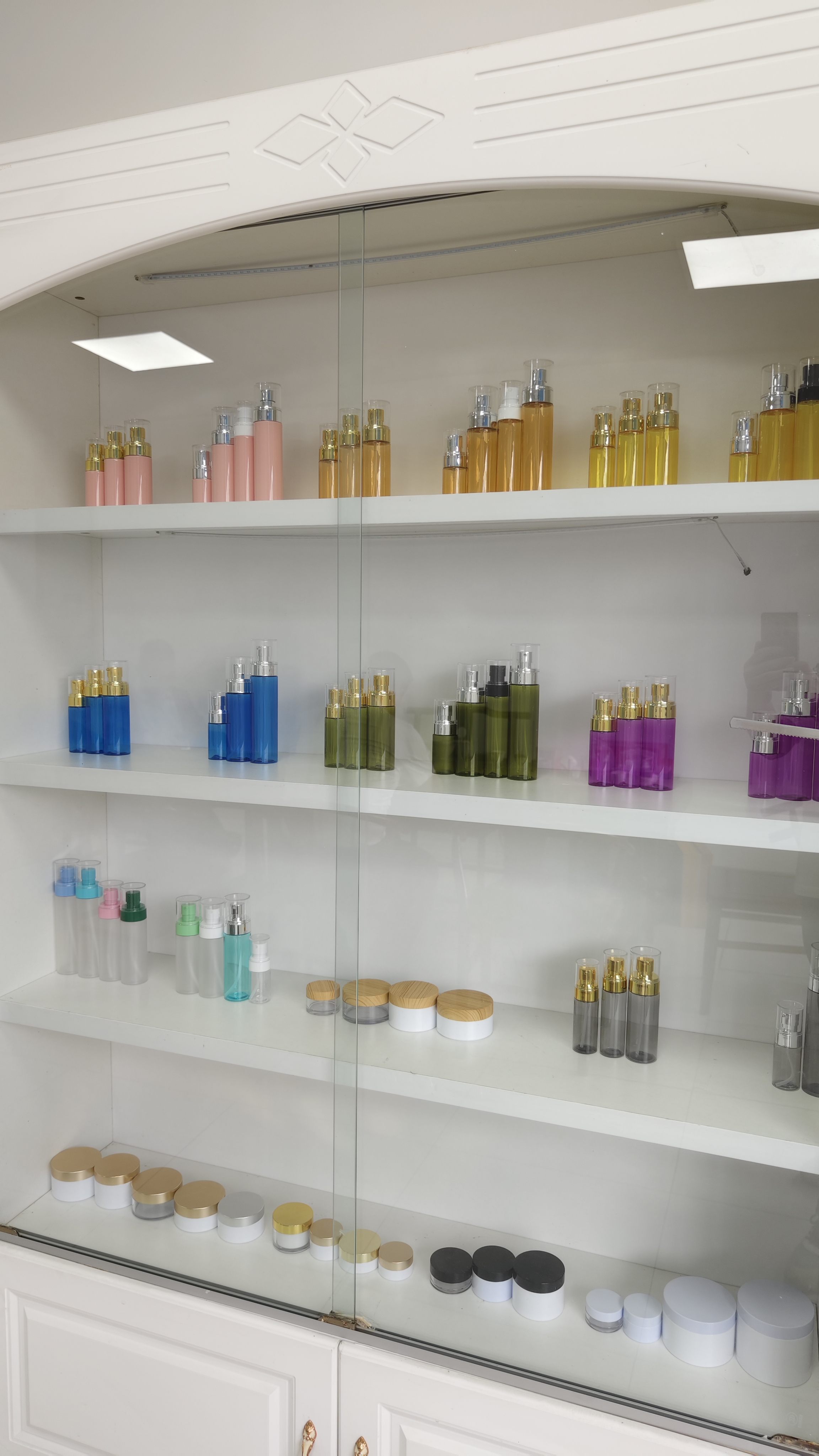


50g Cream Jar Manufacturer: What 50g Really Means
You ordered a 50g jar. The sample arrives. Fill it up and it holds 46g.
Nobody took anything out at the factory. Three numbers were never lined up.
Weight. Volume. Fill level. One jar carries all three. They do not agree.
1. Three numbers hide behind “50g”
Nominal capacity. That is the number on the box and on the PO. A commercial agreement, not a measurement.
Overflow capacity. How much the jar holds when filled to the rim. In millilitres.
Fill capacity. What you can actually put in. Take 85 to 90% of overflow.
The rest is headspace. Not waste. It leaves room for expansion. Room for the plug to seat. Room for movement in transit.
Now the arithmetic. One jar. 60 ml overflow. 52 ml fill. A cream at 1.02 g/cm3. That gives 53g in the same space.
The PO says 50g.
Any of those three numbers can be read as “50g”. This is where short fill complaints start.
2. Gram is weight, ml is volume, and the gap is density
A cream runs between 0.95 and 1.05 g/cm3. Water sits at 1.00.
Take 50 ml. At one end it weighs 47.5g. At the other, 52.5g. A 10% spread inside the same jar.
This also explains something odd. A “50g jar” can be honest at 47g. It can be honest at 53g.
So measure your own density first. A graduated cylinder and a scale will do.
Then work backwards. Net weight divided by density gives the millilitres to fill.
One caution. Density moves when the formula moves. More powder. A different oil phase. Last quarter’s figure is wrong.

3. The capacity ladder, and where 50g sits
| Nominal | Typical overflow | What it suits | Note |
|---|---|---|---|
| 15g | about 18 to 20 ml | samples, travel sizes | tightest filling tolerance |
| 30g | about 35 to 38 ml | eye cream, treatment gel | often shares a mould with 15g |
| 50g | about 58 to 62 ml | day and night cream | the default in the category |
| 100g | about 115 to 125 ml | body cream, hair mask | usually single wall |
| 200g | about 230 to 245 ml | body butter, scrub, salon | stack strength starts to matter |
| 1 oz | about 30 ml | US-facing stock keeping | 1 oz is 29.57 ml, not 30 |
Those overflow figures are typical ranges. Not measured values. Confirm them per mould.
The top of that table is where questions cluster. A 15g cosmetic jar wholesale buyer asks one thing. A 30g cosmetic jar supplier buyer asks the same. Can we share the lid with the 50g.
Sometimes yes. The bore differs, though. The liner gets specced separately.
4. Why 1 oz is not 30 ml
1 US fl oz is 29.57 ml. 1 UK fl oz is 28.41 ml.
Same name. Different units. That is the trap.
Round the first one to 30 and you are 1.4% light before headspace. On a small jar, the net weight check catches it.
So write both units on the quote. 1 oz / 29.6 ml ends the argument early. A sharp 1 oz cosmetic jar supplier does this without being asked.
5. The jar looks fuller than it is
Three structures eat capacity. All three look generous on a shelf.
Double wall. Big outer shell. Smaller inner cup. At the same outside diameter, the insert runs 15 to 25% smaller than a single wall.
Thick wall. 5 mm against 3 mm. Same outline. Less space inside.
Wide and shallow. Reads as full. But the height is low, so the volume is smaller than it looks.
The reverse holds too. A narrow, tall jar looks modest. It holds more.
So judge by the cavity, not the outline. Measure inside diameter. Measure inside height. Run π r2 h with both in centimetres. The answer is millilitres.
6. How to verify capacity before you pay for tooling
Four steps. No laboratory.
- Weigh water. Tare the empty jar. Fill to the rim. Weigh again. The difference in grams is roughly the millilitres. Water is 1.00.
- Measure the cavity. Inside diameter, inside height, cylinder formula. If it lands within 5% of the water figure, both readings are sound.
- Convert with your density. Millilitres times density. That is the grams you can ship.
- Apply headspace. Multiply by 0.85 to 0.90. That is fill volume, not overflow.
Run all four. Then compare with the supplier.
If the numbers do not meet, it is a mould problem. Or a size selection problem. Not a filling technique problem.
One test question separates the two. A real 50g cream jar manufacturer answers with two figures. Overflow. Fill. One that says “50g is 50g” has never put a jar on a scale.
7. What to put in the spec sheet
Six lines. The argument is over before sampling.
- Nominal capacity in grams, plus the density it assumes.
- Overflow capacity in millilitres.
- Fill capacity in millilitres.
- Inside diameter and inside height, in millimetres.
- Bore and thread. For example 53 mm or 63 mm.
- Unit weight in grams, lid included.
Two additions by size.
At the large end, add a stack test. How many units high. At what load. A 100g cosmetic jar wholesale order usually skips it. A 200g cosmetic jar supplier order should not. Jars that collapse in a container are a common complaint. The fix belongs before the mould, not after.
At the small end, add filling accuracy. A line running ±0.5g is 3% out on a 15g jar. That error is bigger than the density spread everyone argues about.
8. Send your density, get the right size
The most useful sentence in an inquiry is not “I need a 50g jar.”
It is this. My cream is 1.02 g/cm3. Net fill 50g. I need safe headspace.
Three figures. With them, any supplier can calculate overflow. And recommend a mould from the range instead of guessing.
It also sorts the replies fast. A 50g cream jar manufacturer that answers with a fill volume and a cavity size is reading a mould sheet. One that answers with a price only is reading a catalogue.
Send density and net weight through the contact page. The spec sheet comes back with the sample.
Where this sits in the range
The moulds behind these figures run 15g to 200g across the cream jar range. Wall thickness, bore and decoration sit on the OEM page. First order? The commercial side is covered under Beauty Packaging Buying Guide. MOQ and lead time included.
One last point. Capacity is the cheapest thing to check. It is also the most expensive to get wrong. Run it in water, on a sample, before the tooling PO goes out.